Updated on Aug 7, 2025
What Are the Pros and Cons of Electric Cars?
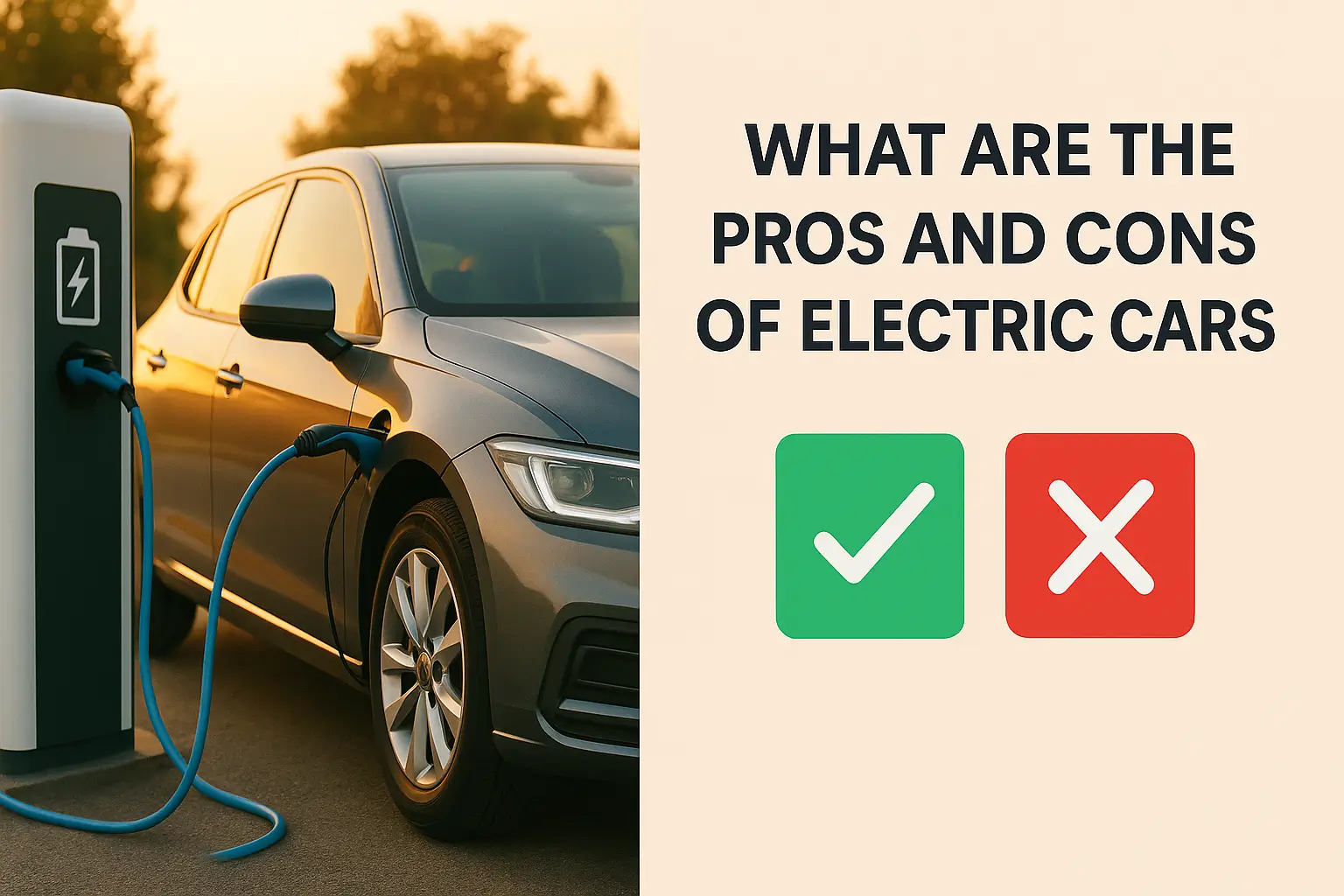
Electric cars (EVs) have gained immense popularity in recent years as an innovative and eco-friendly alternative to traditional vehicles.
Governments worldwide are encouraging the shift to electric mobility in an effort to reduce greenhouse gas emissions and combat climate change. But as with any technological evolution, electric cars come with their own set of advantages and disadvantages.
This article explores in detail the pros and cons of electric cars, comparing them with gasoline and petrol powered vehicles, and analyzing their environmental impact.
Pros of Electric Cars
Environmentally Friendly
One of the biggest pros of electric cars is their low environmental impact. Unlike gasoline or diesel vehicles, electric cars produce zero tailpipe emissions, which helps reduce air pollution in cities.
Lower Operating Costs
EVs are generally cheaper to run than internal combustion engine (ICE) vehicles. Electric Vehicles require less maintenance as electricity isn’t costly in comparison with diesel or petrol as well as they contain fewer movable parts.
Smooth and Quiet Operation
Electric cars offer a smoother ride with instant torque delivery, and they operate quietly, reducing noise pollution.
Government Incentives
Many governments provide tax credits, rebates, and other incentives to encourage EV adoption, which reduces the initial cost for buyers.
Reduced Dependency on Fossil Fuels
By using electricity, especially from renewable sources, electric cars reduce our dependence on finite fossil fuels like petrol and diesel.
Cons of Electric Cars
Limited Range
A major drawback is the limited driving range compared to gas-powered cars. Though technology for electric vehicles has improved yet for long distance travelers range remains an utmost concern.
Long Charging
Times Charging an electric car can take several hours, depending on the battery size and charger type. Fast charging infrastructure is still not widely available in many regions.
Higher Upfront Costs
Although EVs save money in the long term, their initial purchase price is often higher due to the expensive battery systems.
Battery Degradation
Over time, EV batteries lose their capacity, reducing the car’s range and efficiency. Replacing a battery can be costly.
Charging Infrastructure
The availability of charging stations is still limited in many countries, particularly in rural or remote areas.
Pros and Cons of an Electric Car Compared to Traditional Vehicles
Pros and Cons of Electric Cars vs Gas Cars
When comparing the pros and cons of electric cars vs gas cars, several key differences stand out:
| Electric Cars: | Gas Cars: |
|---|---|
| Pros: | Pros: |
| • No tailpipe emissions • Lower fuel and maintenance costs • Quieter and smoother driving experience • Eligible for government incentives | • Refueling is quick and convenient • Longer driving range • More vehicle options available • Lower upfront cost |
| Cons: | Cons: |
| • Longer refueling (charging) times • Limited driving range • Less convenient charging access • Higher initial cost | • Higher fuel and maintenance costs • Harmful emissions contribute to pollution and climate change • Heavier reliance on fossil fuels |
While gas cars currently offer more convenience in terms of refueling and range, electric vehicles are ahead in terms of sustainability and cost-efficiency over time.
Pros and Cons of Petrol Cars vs Electric Cars
The pros and cons of petrol cars vs electric are quite similar to gas vs electric comparisons, but it’s worth highlighting specific differences:
| Petrol Cars: | Electric Cars: |
|---|---|
| Pros: | Pros: |
| • Well-established infrastructure • Generally lower purchase cost • Suitable for long-distance driving • Faster refueling times | • No emissions during operation • Lower maintenance needs • Energy-efficient • Reduced operating cost |
| Cons: | Cons: |
| • Emit carbon dioxide and other pollutants • Require regular oil changes and engine maintenance • Higher operational cost in the long run | • Dependent on access to electricity • Battery replacement is expensive • Charging takes longer than refueling |
In essence, petrol cars remain practical in regions with limited EV infrastructure, but electric cars are better suited for urban use and environmentally conscious drivers.
Pros and Cons of Electric Cars on the Environment
Understanding the pros and cons of electric cars on the environment requires a deeper analysis of their full life cycle, from manufacturing to disposal.
Environmental Pros of Electric Cars
Lower Carbon Emissions
When powered by clean energy, EVs drastically reduce greenhouse gas emissions compared to petrol or diesel cars.
Reduced Air Pollution
EVs produce no tailpipe emissions, which helps decrease urban air pollution, a major health hazard in many cities.
Energy Efficiency
Electric cars are efficient as they power the wheels from the converted electrical energy as compared to the traditional vehicles.
Potential for Renewable Integration
EVs can be charged using solar, wind, or hydropower, making them an integral part of a sustainable energy future.
Environmental Cons of Electric Cars
Battery Production Impact
Mining lithium, cobalt, and other minerals for EV batteries can be environmentally damaging and ethically concerning.
Electricity Source Matters
Electrical Vehicles can bring a drastic reduction in resources like coal or other fossil fuels s they are operated with electricity.
Battery Disposal and Recycling
Safe disposal and recycling of used batteries remain a challenge. Improper handling can lead to toxic waste and environmental hazards.
While EVs are not entirely “clean,” they are considerably better for the environment when their full impact is measured against petrol or gas cars.
Environmental Pros and Cons of Electric Cars
To further clarify, here is a summary table highlighting the environmental pros and cons of electric cars:
Environmental Pros
- Zero tailpipe emissions
- Less urban air pollution
- Potential for renewable energy charging
- Reduced carbon footprint over time
Environmental Cons
- Mining for battery materials is resource-intensive
- Battery manufacturing creates emissions
- Powering EVs with coal-based electricity is harmful
- Battery recycling infrastructure is still limited
This balanced view helps consumers make informed choices about how their transportation habits affect the planet.
Conclusion
Electric Vehicles are key forward for environmental-friendly future of transportation. While they come with challenges like limited range, high upfront cost, and infrastructure concerns, the pros and cons of electric cars reveal that they are generally more efficient, environmentally friendly, and cost-effective in the long run.
Comparing the pros and cons of electric cars vs gas cars or petrol cars vs electric, it becomes evident that EVs are better suited for a future focused on reducing emissions and conserving natural resources.
However, the journey to full electric mobility requires improvements in battery technology, renewable energy generation, and global infrastructure.
As the automotive industry evolves and governments continue to support clean transportation, the environmental pros and cons of electric cars will remain a central topic. Ultimately, consumer awareness and informed choices will shape the trajectory of the electric car revolution.